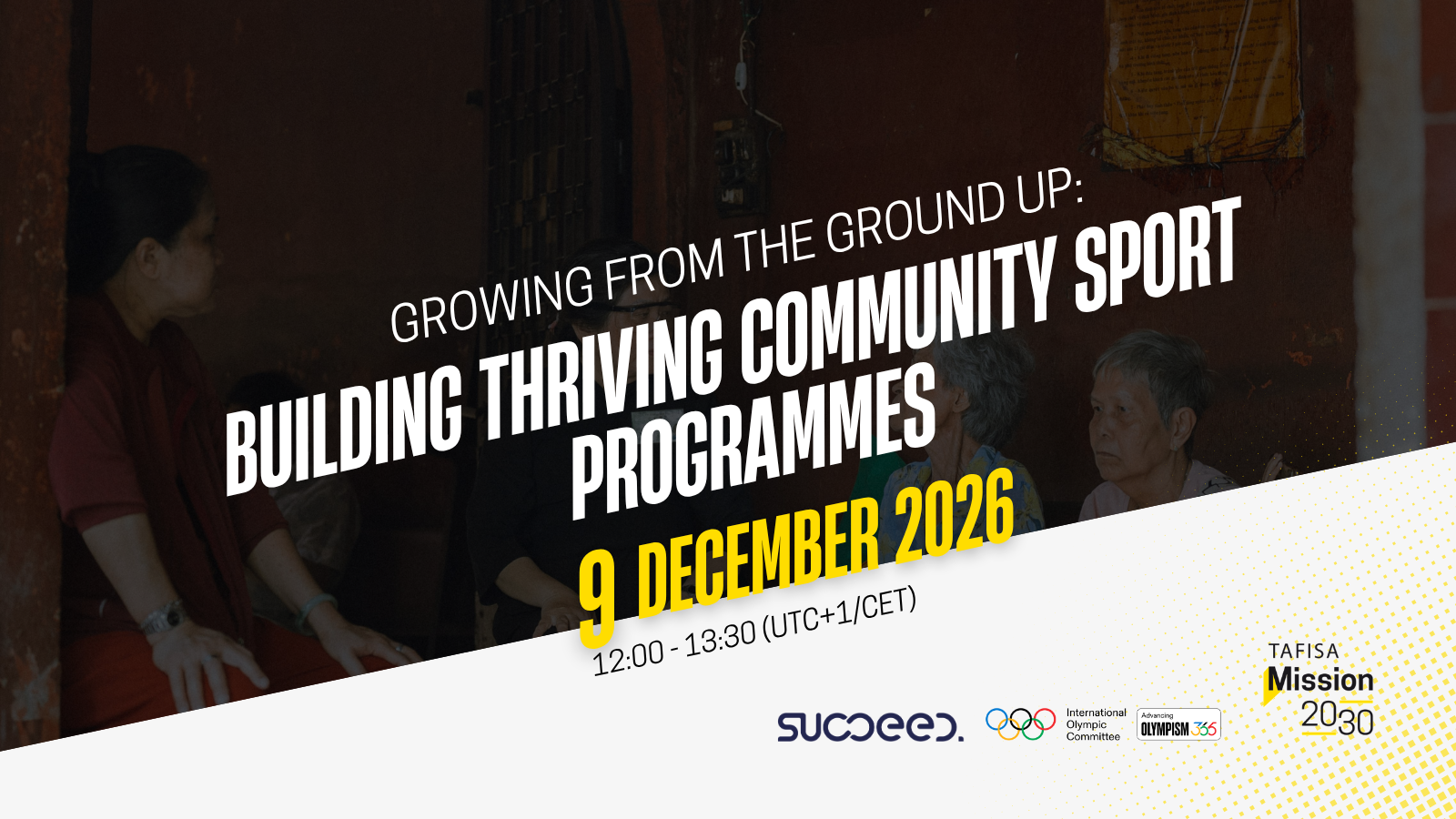
Community sport programmes are built on borrowed facilities, unpaid, volunteered time and short-term funding that arrives shaped by different priorities and leaves on a different timeline. The uncomfortable truth is how many promising community initiatives exist for just a few months or years and then quietly stop, leaving behind participants who had begun to rely on them. The question worth asking is not how programmes get started, but what allows them to take root, to grow from one person's initiative into something a community recognises as its own and keeps going without them.
Growing from the ground up means building from what a community already has, its spaces, its gatherings, its volunteers, its existing relationships of trust, rather than importing a model designed somewhere else and hoping it aligns and works. Across the TAFISA network, there is a substantial body of community projects designed and delivered by leaders working in their own contexts, responding to challenges they identified themselves; inclusive play spaces, gender equity, intergenerational activity, sport in places where little existed before.
Through the experience of community practitioners, the discussion will examine how programmes find their first participants and earn trust in places where previous initiatives have come and gone; how they keep running when the funding is small, late or absent, and what can be built without waiting for a grant; how local partnerships turn a programme from an outsider's activity into a fixture of local life; how volunteers are found, kept and eventually handed responsibility; and how a programme moves from depending on its founder to belonging to its community. It will also ask the harder questions like what to do when a programme should end, and how small organisations evidence their value to people who only recognise numbers.